In modern design trends, Asian architectural style still retains its special position thanks to its elegance, closeness and harmony with nature. Not only does it have aesthetic value, this style also deeply reflects the cultural, spiritual and feng shui values of Eastern countries such as China, Japan, Korea and Vietnam. In this article, S-House will explore with you Asian architectural style and 5 outstanding cultural characteristics, along with important notes when applying to the design of houses, restaurants or cafes.
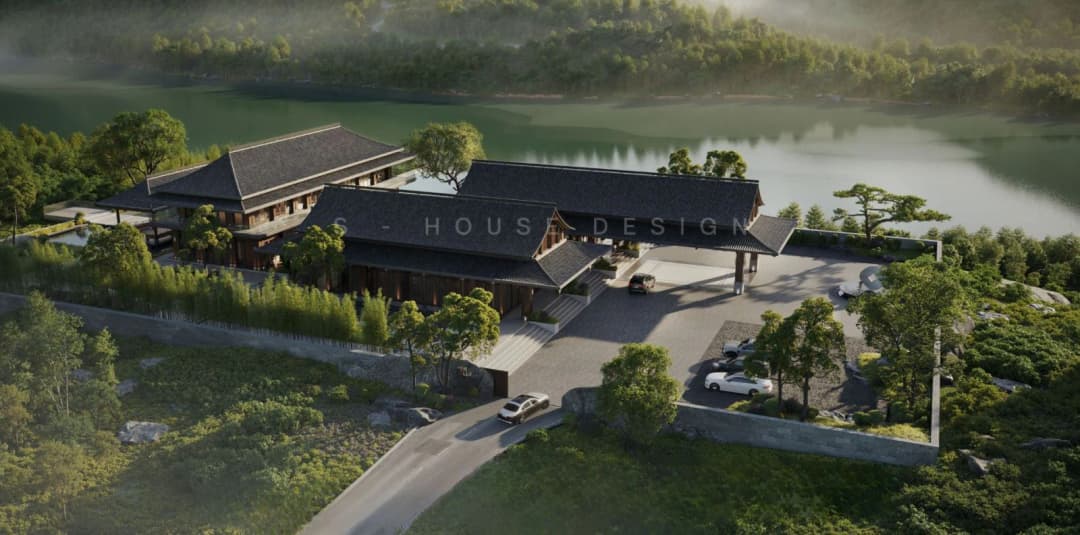
>>>See more: Yen Phu - Super product of home resort with bold Asian style
What is Asian architectural style?
Asian architectural style is a design school that harmoniously combines tradition and modernity, imbued with the cultural identity of Asian countries, especially East Asia and Southeast Asia. Formed over thousands of years, this style is deeply influenced by philosophies such as Taoism, Buddhism and the unique culture of each country. Traditional Asian architecture not only focusing on aesthetic beauty but also on balance and harmony with nature and feng shui elements, bringing a feeling of peace and closeness.
This style is widely applied in the design of houses, restaurants, and cafes, creating a cozy, luxurious and attractive space. Below are 5 outstanding cultural characteristics of Asian architectural style:
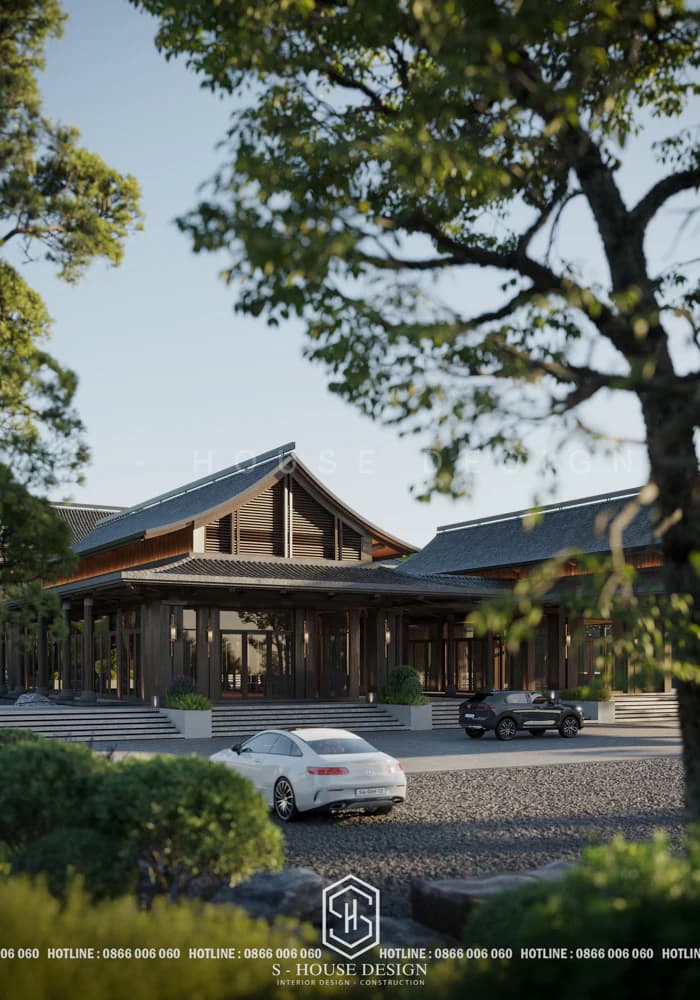
Asian architectural style with curved roofs and open spaces in modern housing
5 Outstanding cultural characteristics of Asian architectural style
Asian architectural style has unique characteristics, reflecting the culture, philosophy and lifestyle of Asian countries such as China, Japan, Vietnam, Korea...These features not only create unique beauty but also deeply reflect the philosophy of harmonious and balanced living of Asian people.
1. Use natural materials
Natural materials in Asian design such as wood, bamboo, stone, brick, rattan and ceramic are core elements in traditional Asian architecture. The space layout is simple but sophisticated, avoiding clutter. The interior is often neat, focusing on functionality and elegance. These materials are not only sustainable and environmentally friendly but also create a rustic, simple but no less sophisticated beauty. For example, wood is used in furniture and home structures, while bamboo and rattan often appear in decorative details, bringing a feeling of closeness to nature.
Learn more about natural materials in Asian design.
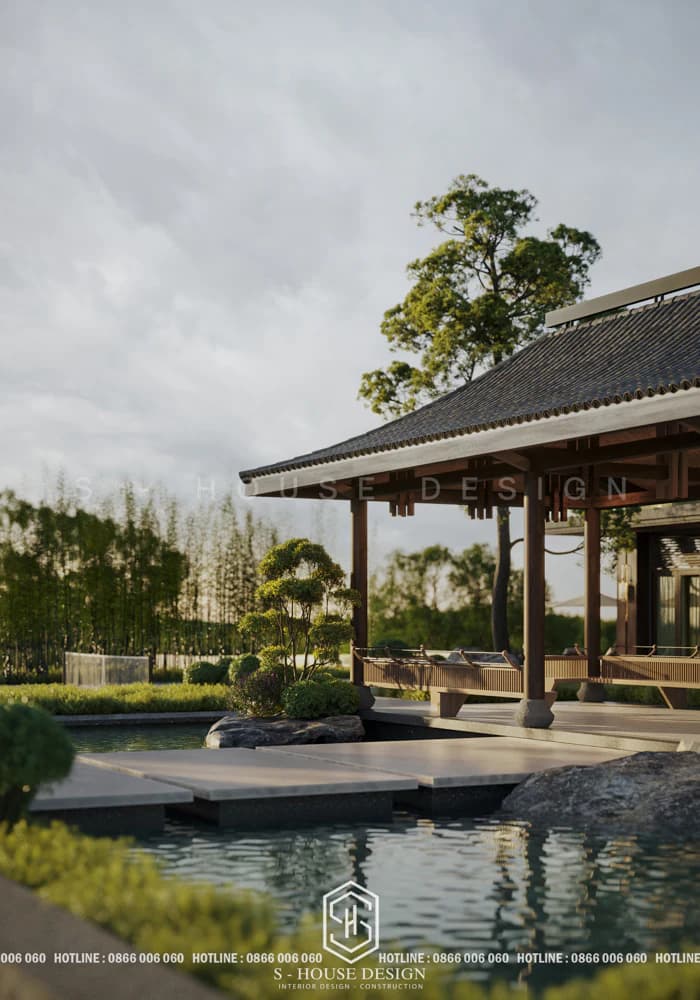
2. Traditional motifs
Traditional motifs are the highlight of the house Asian architectural style. Images such as lotus flowers, clouds, water waves, orchids, ink paintings or silk paintings are often used to decorate the space. These details are not only highly artistic but also represent profound cultural values, creating elegance and uniqueness for Asian interior design.
3. The roof is curved and sloping
Curved and sloping roofs (like curved tile roofs in China and Vietnam) are the most recognizable symbols of traditional Asian architecture, especially in traditional buildings such as temples, pagodas or houses that have feng shui significance, helping to ward off evil spirits and create a feeling of softness and flexibility. Curved roof designs are often decorated with dragon, phoenix or traditional patterns which are not only aesthetically pleasing but also represent harmony with nature and feng shui in Asian architecture, helping to regulate the air.
4. Open space connecting with nature
Asian architecture often uses mobile partitions (like Japanese shoji sliding doors) to create flexible spaces that can easily be changed according to usage needs. Rooms often have no fixed boundaries, creating a spacious and airy feeling. Designs often use large windows, porches, gardens or empty spaces to bring natural light into the house. This not only creates an airy feeling but also helps homeowners feel relaxation and peace in an Asian-style home.
5. Feng shui in design
Feng shui in Asian architecture is an indispensable element in Asian architectural style. The buildings are designed based on feng shui principles, from house direction, door position, to interior layout. Colors, shapes, and materials also have symbolic meanings, expressing the philosophy of yin and yang, the five elements, or spiritual cultural values to bring harmony, luck, and fortune. This is a special point that makes this style even more spiritually meaningful.
>>>Refer to feng shui guidelines in Asian architecture
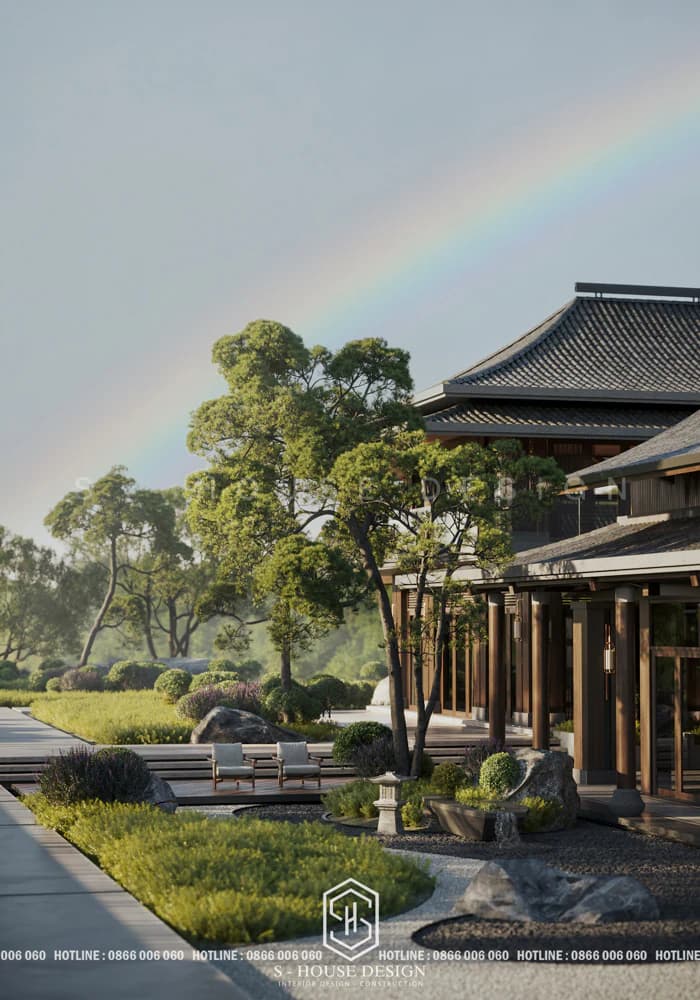
Natural materials in Asian design such as wood and bamboo in home interiors
3. Applying Asian style in residential architecture
Architectural colors
Asian architecture is heavily influenced by Chinese and Japanese culture. Therefore, the main color of this architecture also depends on the culture of the two countries above.
Japanese people often like light, neutral colors. As for Chinese people, they often like bright, outstanding colors. Therefore, the main colors in Asian-style houses are bright and quite elegant. Then add details or furniture with striking colors such as red, brown or black...
Oriental furniture
Simple interior design
A simple but sophisticated design is also the first thing that Asian style strives for. This architectural furniture needs to follow modern trends, simple design, and focus on functionality to bring a convenient and comfortable life to the family.
Oriental architectural interior follows modern trends and simple design
The interior is arranged scientifically and reasonably
Eastern people love sophistication and elegance, so interior furniture is arranged neatly and simply. Although Japanese people choose neutral colors while Chinese people prefer bold colors, no matter what, the layout is still simple and scientific.
Oriental style interiors favor sophistication and elegance
A small but clean and airy living space will create conditions to highlight decorative details in your home.
Use a low tea table
Eastern culture has been known since ancient times for its tea culture, which still exists today as a heritage. Low tea tables often appear in Asian homes. With this design, the house has a quite quiet space with a beautiful and healthy lifestyle.
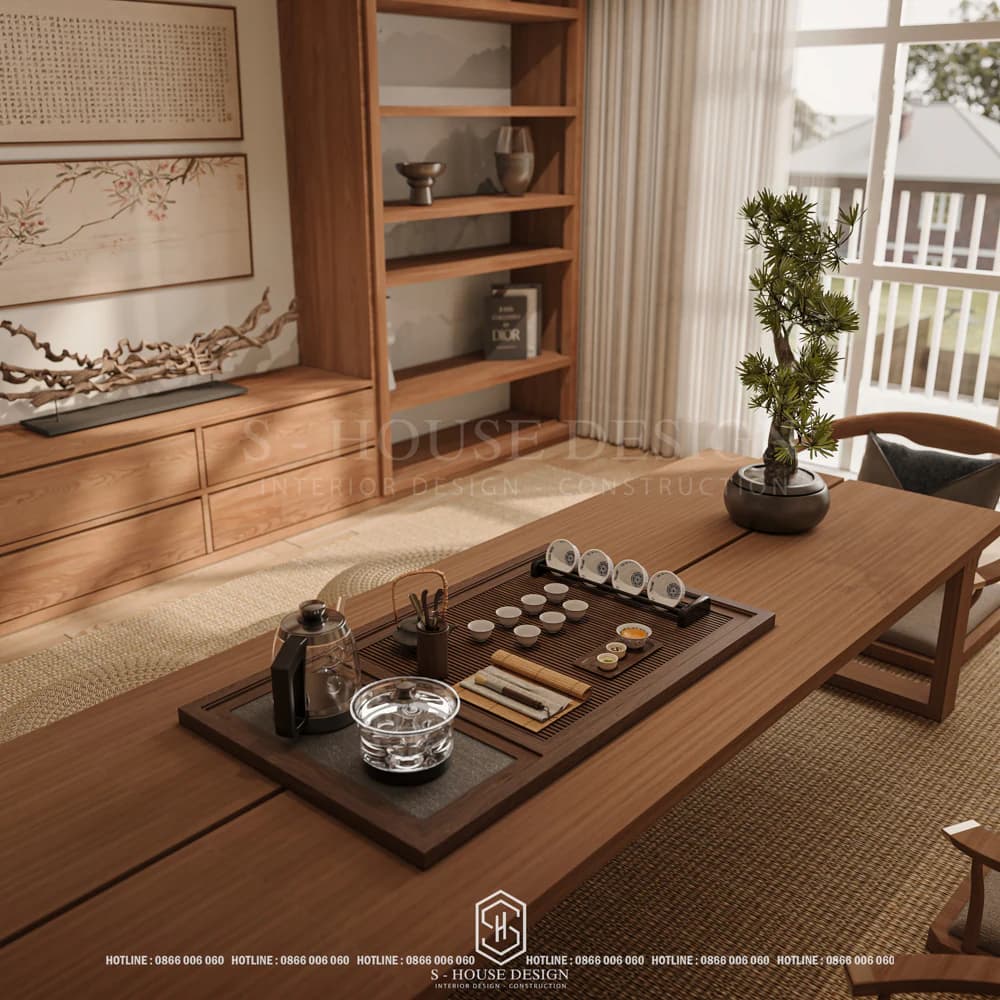
Low tea tables often appear in Asian homes
Asian decorative materials
Use natural materials
An important detail in Asian architecture is the use of materials of natural origin. The typical lifestyle of Eastern people is friendly, peaceful and close to nature. Therefore, choosing furniture made of wood, stone, brick, rattan, ceramic, gives homeowners a natural feeling.
Choosing furniture made of wood, stone, brick, rattan, and ceramic gives homeowners a natural feeling
Use paintings in decoration
Decorations such as hand-embroidered paintings, silk paintings, ink paintings and especially orchids are very popular in Asian architecture. The ancients had a saying: "The king plays with orchids, the mandarins with tea" partly expressed the preciousness and elegance of that flower. Thanks to this very unique choice, it has brought an extremely elegant and elegant space to Asian style interiors.
Space layout
Asian architectural style focuses a lot on the design and layout of the room to create a beautiful and comfortable space, bringing more space to the house. The "breathing space" design makes it easy to combine items such as plants, decorative lights, ceramic vases...
The art of installing doors and lighting
Natural light is an indispensable element in Asian architectural houses. Eastern people attach great importance to the element of balance, especially the most harmonious and reasonable arrangement of doors and lighting. Therefore, Asian architecture will have an even and reasonable distribution of light doors.
Natural light is an indispensable element in Asian architectural houses
4. Current contemporary Asian architectural design trends
Contemporary Asian architecture is no longer as strict as before but chooses a minimalist approach, with furniture suitable to the family's needs to provide a comfortable living space.
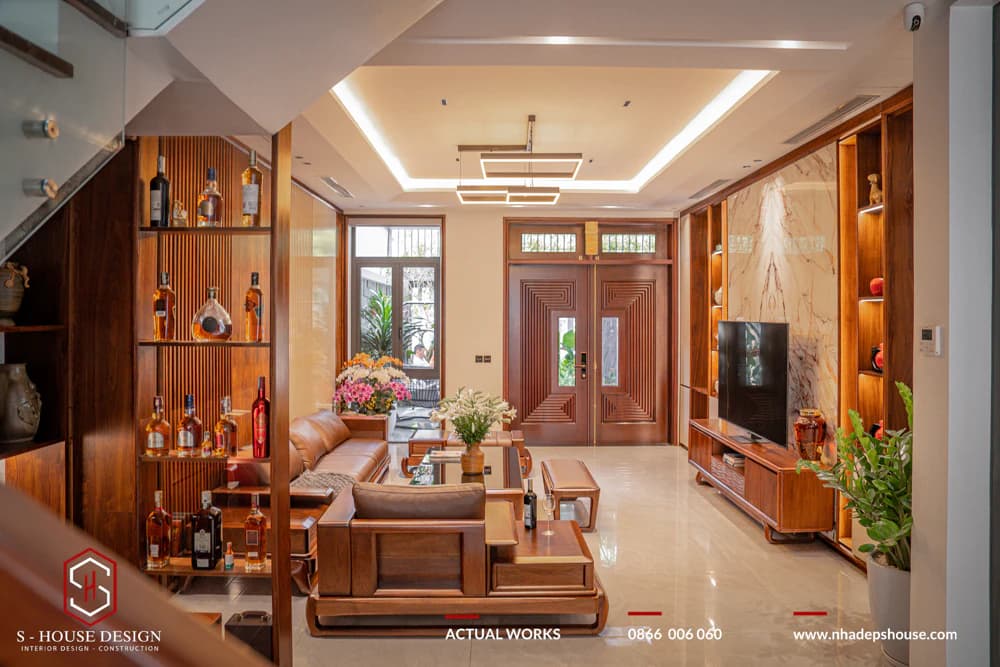
Current contemporary Asian architectural design trends
Recent contemporary Asian design also reflects the rapid development of the economies of Asian countries. Great changes in social life intersected with Western countries. Therefore, this contemporary architecture has the main difference which is the mixture of East and West cultures.
Contemporary Asian style is the inheritance of the legacy of old culture and creating it to suit the new era. This is completely a cultural choice that meets the needs of modern functionality and lifestyle.
5. Asian architectural style design
Yen Phu Maison Retreat kNot just a house, but also a symbol of a classy lifestyle. With sophisticated Asian design, beautiful location in Tam Dao, and care from S-House, this project is the perfect choice for those who want to own a luxurious home vacation space. Every detail is designed to bring relaxation, balance, and personalization to your style.
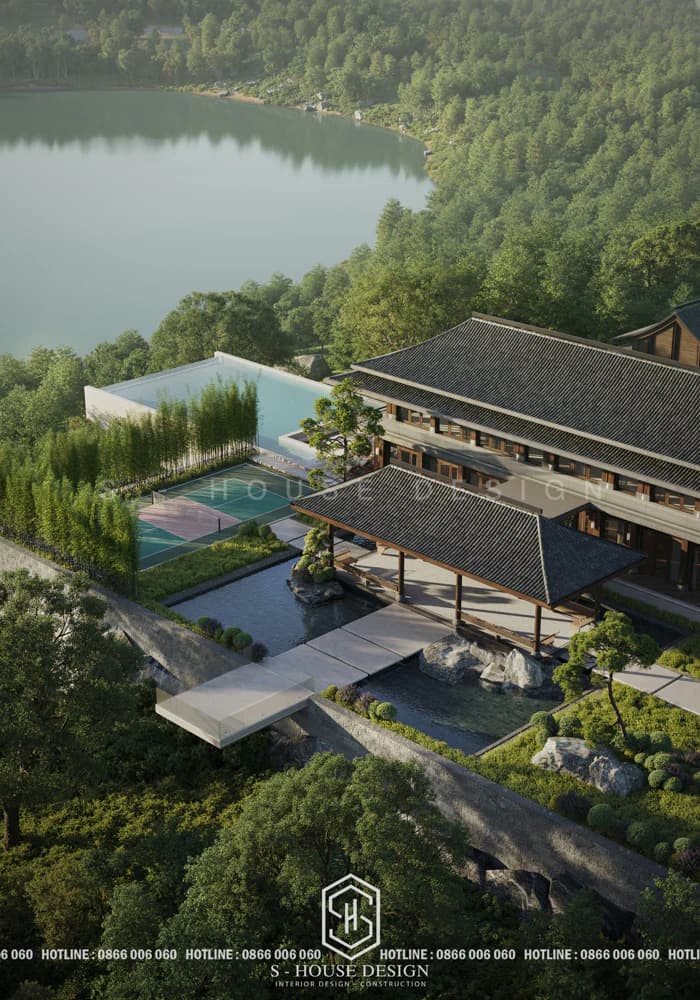
Yen Phu Maison Retreat has a strong sense of Asian architecture
Asian architectural style Bringing home an elegant living space, close to nature and rich in culture. With a harmonious combination between Natural materials in Asian design, traditional motifs, curved roofs, open spaces and Feng shui in Asian architecture, this style not only meets aesthetic needs but also brings profound spiritual value. In the modern context, Traditional Asian architecture has been adapted to suit contemporary lifestyles. Instead of strictly following traditional rules, Asian architectural style Modernity focuses on minimalism, comfort and the interference between East and West cultures. Contemporary designs often use Asian interior design Simple, scientific layout and integration of modern elements to meet the needs of families or customers.
S-House hopes that, with the above suggestions, you will find inspiration to apply Asian architectural style into your home, creating a comfortable, sophisticated and meaningful living space.
See more: Completed projects handed over to homeowners are fully designed and constructed by S-House.
What is your favorite feature of Asian architectural style? Please contact us now hotline 0866 006 060 or leave information via: https://nhadepshouse.com/nhan-mau-thiet-ke/ S-House will quickly contact you within 24 hours.
------------------------------
S-House Joint Stock Company - Unit ARCHITECTURAL - INTERIOR DESIGN AND CONSTRUCTION has developed strongly with a system of 4 strategic branches stretching from North to South. Confident in being a reputable and quality architectural and interior design and construction company in terms of project quantity and quality. Our team of experienced architects not only builds houses, but also creates living works of art. Let S-House turn your ideas into reality today!
Hotline: 0866 006 060
E-mail: nhadepshouse@gmail.com
Branch system nationwide:
► In the city. HCM: No. 280A1, Luong Dinh Cua Street, An Phu Ward, District 2, Ho Chi Minh City
► In Nha Trang: No. 62A - 62B, Phan Chu Trinh Street, Van Thanh Ward, City. Nha Trang, Khanh Hoa
► In the city. Vinh: No. 19, An Duong Vuong Street, Truong Thi Ward, City. Vinh, Nghe An
► In Hanoi: Apartment Y01.L07 An Phu Shopvilla, Duong Noi Urban Area, Ha Dong, Hanoi.


