What is a step? How to calculate steps according to feng shui to bring fortune into the house
Steps are one of the common details in the construction of villas, townhouses, civil and public buildings, etc. According to Vietnamese feng shui, steps are very important related to the homeowner's fortune. However, not everyone knows how to calculate steps according to feng shui standards, avoiding unwanted taboos. So what is a Step? How to design steps according to feng shui standards? Let's find out details with S-House through the following article.
I. Concept of steps
The steps are the connection between the yard and the house, making living activities inside and outside the house more convenient. The three steps are also the connection between the floor and the stairs, this is the stepping stone to go upstairs for the members. Stair steps are not only designed for houses but are also applied to many large-scale projects such as hotels, state agencies and public buildings, etc. Properly designing stair steps not only creates convenience in traveling, but also adds luxury, increasing good luck for the homeowner, bringing luxurious and majestic beauty to the project.
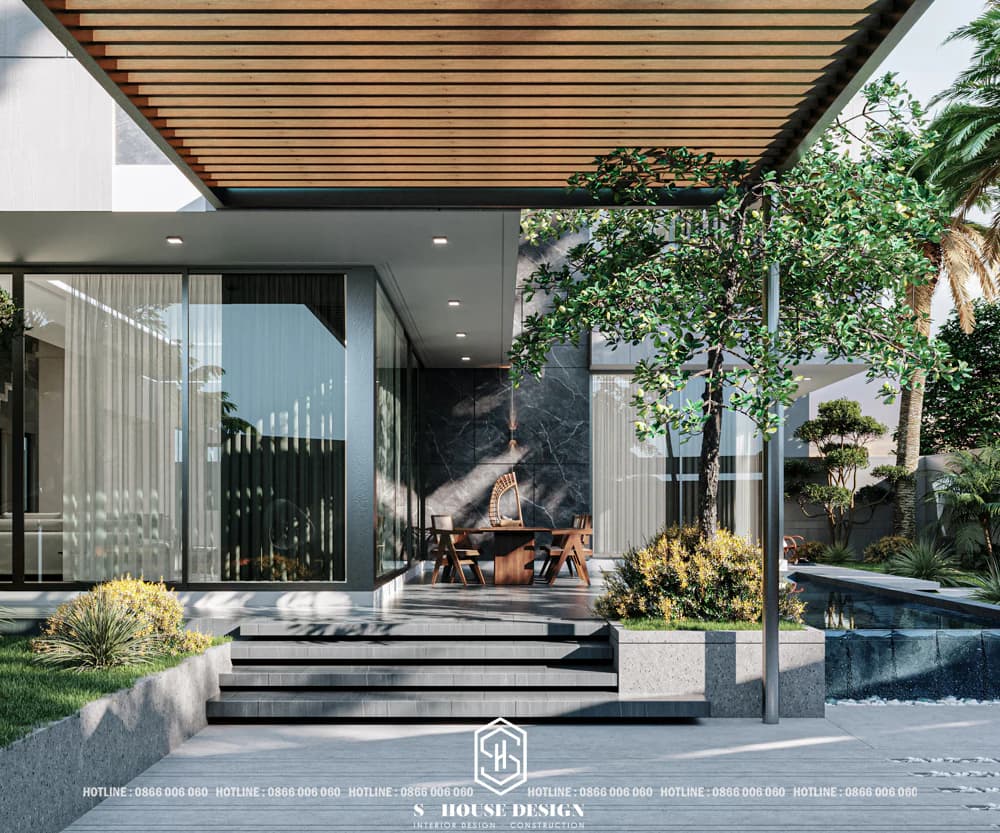
Townhouse steps
Steps have been around for a long time and the name was also used by ancient people to refer to the three steps in front of the house - the bridge between the yard and the indoor area. However, nowadays, there are many three-step constructions that no longer maintain the same number of steps as the name suggests, but they are flexibly adjusted according to the law of "heaven - earth - people", or the law of "birth-aging-sickness-death". Therefore, for many large-scale projects, three steps are not enough, so they will have to build stairs with a number of steps divisible by 3.
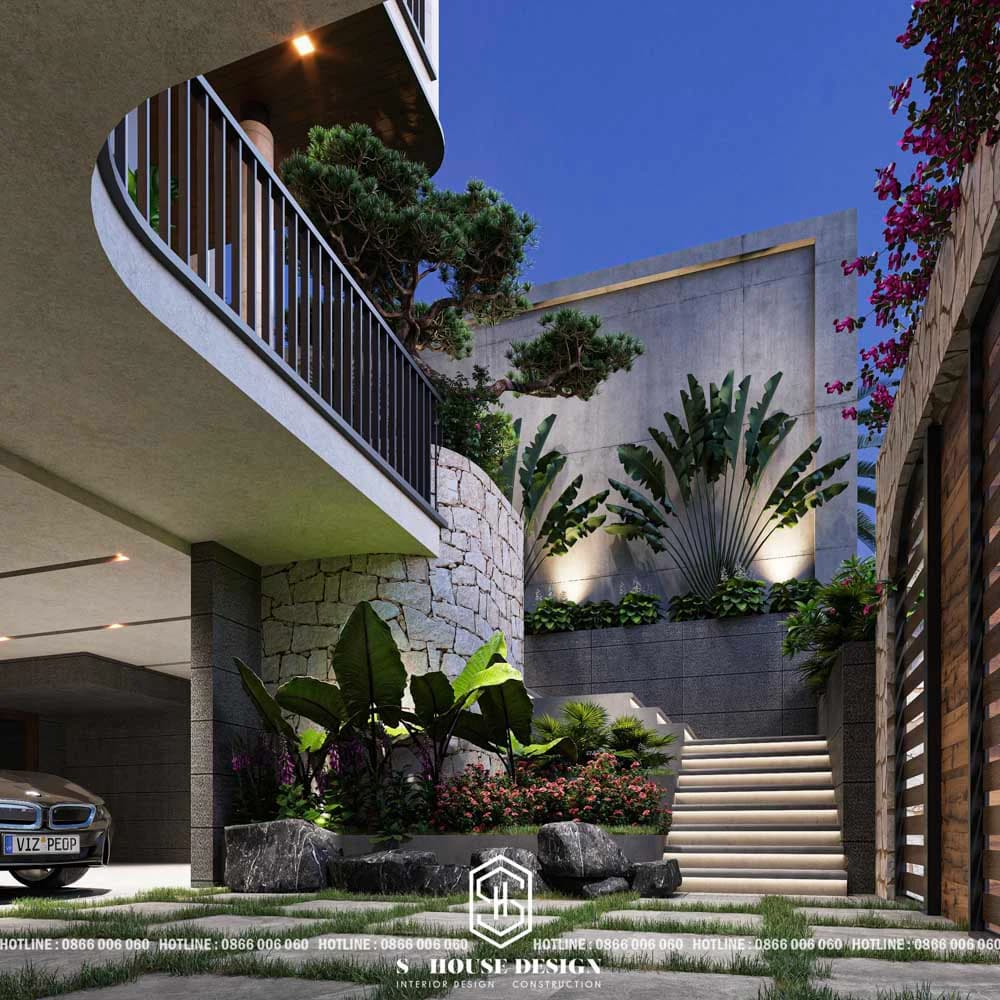
Steps of a 3-story townhouse
II. Ways to calculate ternary degree
1.Calculating three steps in accordance with feng shui
The number of steps when building will depend on the project or location, calculated from the ground or yard up to the main hall (porch, floor) of the house. This distance will be proportional to the number of steps of the house.
For villas and townhouses, 3 - 5 steps are usually used, however there will be cases of 7 - 9 steps for public buildings or temples to show the dignity as well as the sturdiness and sustainability of the project.
In some cases, many houses build terraces with only 1 step due to the low distance between the yard and the main hall. If you fall into this situation, it will not affect anything because it does not violate the view of birth, old age, sickness and death. In feng shui, when constructing steps, just pay attention to whether it falls into "birth" or "old age" and it will be good for the homeowner.
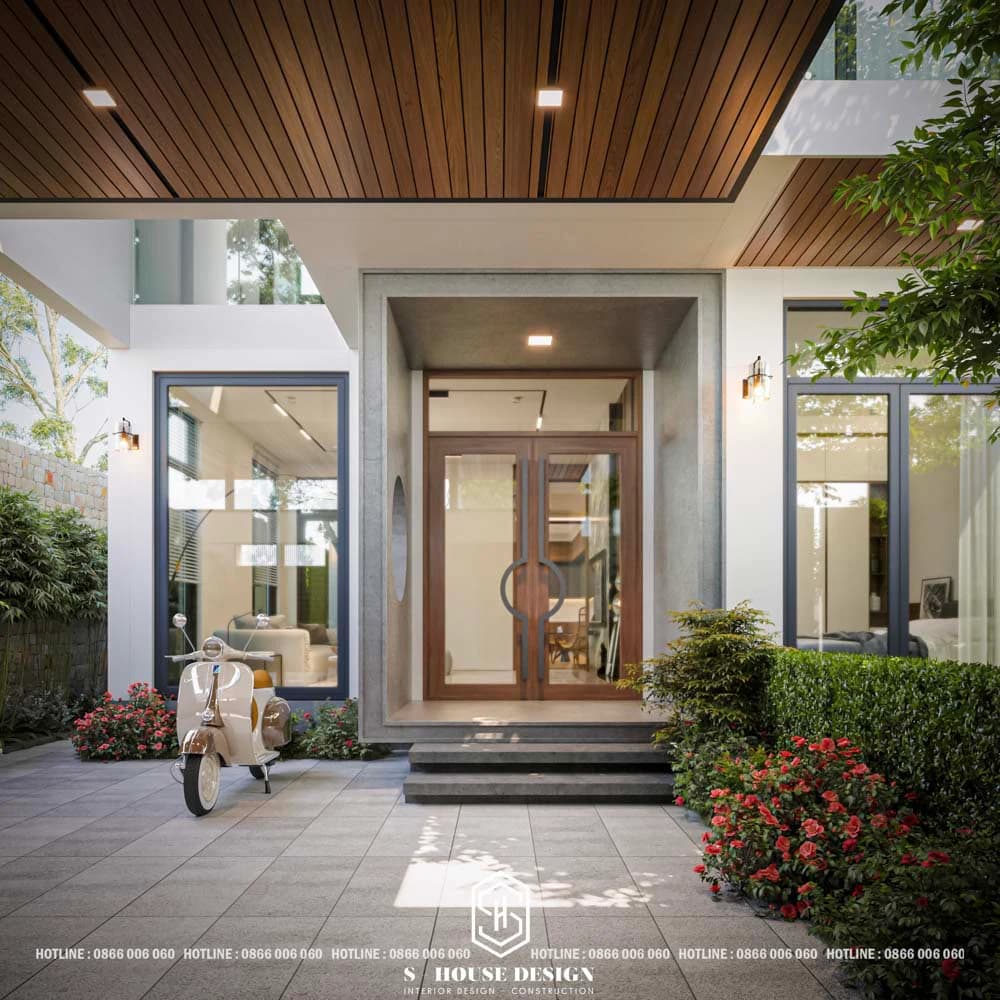
Townhouse steps
2. Choose the most standard step size according to the hole.
The average size of the most used steps today is:
+ Step height: 15 - 18cm
+ Step width: 20cm - 30cm
+ Length of steps: Depends on the needs of each project
As for length, feng shui is not regulated because it depends on the width of the hall to ensure maximum aesthetics for the house. The width of the steps will be equivalent to the width of the main hall. For houses or buildings with a large lobby design, the steps must also be long enough to encompass the entire space of the lobby.
Depending on the design and usage needs, three steps can be built on each front facade, or surrounding 2 or 3 sides of the house.
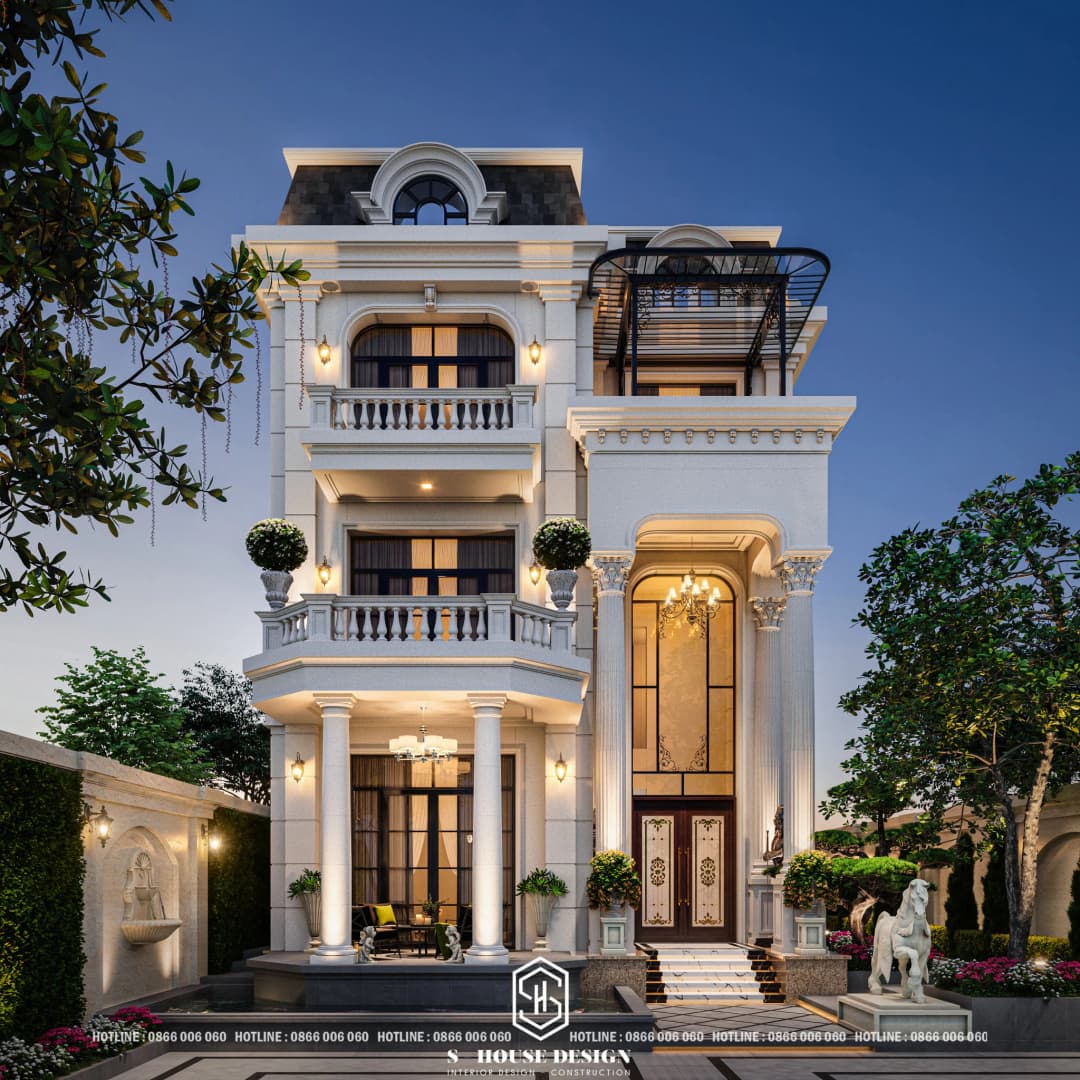
Refer to the steps neoclassical villa
3. Instructions on how to calculate m2 of steps
Step surface area (lying surface)
The step surface, also known as the horizontal surface, is the area parallel to the ground.
Formula to calculate step surface area:
Step surface = Length x Width x Number of steps (not including landings)
In case there is no landing, multiply the number of steps as usual. The number of steps according to the beautiful size of the stairs is 19, 21 steps.
Area of collar (facade)
The area of the step neck or façade is the area of the façade perpendicular to the ground
Formula to calculate the area of the neck:
Step collar = Width x Length x Number of steps (Including landings)
The landing area is calculated as follows:
The landing is the middle part of the stairs, they may or may not be present, usually used in large areas.
Formula to calculate landing area:
Landing = Width x Length x Number of landings
Calculating the total of the above 3 items will result in the area of stone covering the stairs multiplied by the construction unit price
Calculate the Wall Lining part:
On the lying surface: (width + 0.1) x number of steps (not including landings)
On the facade: (height + 0.1) x number of steps (calculated landing)
On landing: (width + length) x number of landings. Adding all the wool strips above the landing this formula is only valid for the image above.
Adding up all the above items will give you the length of the skirting board, multiplied by the construction unit price per meter long to get the amount of the wool.
The central level not only acts as an intersection between the yard and the house but is also related to the aesthetics of the architectural work. Therefore, customers should note the above information when calculating steps. If you are in need of design and construction, please contact S-House immediately via hotline 0866 006 060, we are ready to 'upgrade' your lives.
------------------------------
S-House Joint Stock Company - Specializing in design and construction
Hotline: 0866 006 060
E-mail: nhadepshouse@gmail.com
Branch system nationwide:
► In the city. HCM: No. 280A1, Luong Dinh Cua Street, An Phu Ward, District 2, Ho Chi Minh City
► In Nha Trang: No. 62A - 62B, Phan Chu Trinh Street, Van Thanh Ward, City. Nha Trang, Khanh Hoa
► In the city. Vinh: No. 19, An Duong Vuong Street, Truong Thi Ward, City. Vinh, Nghe An
► In Hanoi: Apartment Y01.L07 An Phu Shopvilla, Duong Noi Urban Area, Ha Dong, Hanoi.


